
Shaping homes for health, independence and connection - Newcastle 2026
Hosted at the Crown Plaza in Newcastle in February 2026, this conference brought together leaders in housing, health, and social care to explore the themes of health, independence and connection.
The event left us reflecting on how fundamentally housing is being reimagined for ageing populations and disabled people. Across the sessions, there was a clear shift away from seeing housing as simply accommodation, toward understanding it as a foundation for health, independence and community connection. The collaboration between planners, architects, providers and local services was strongly emphasised.
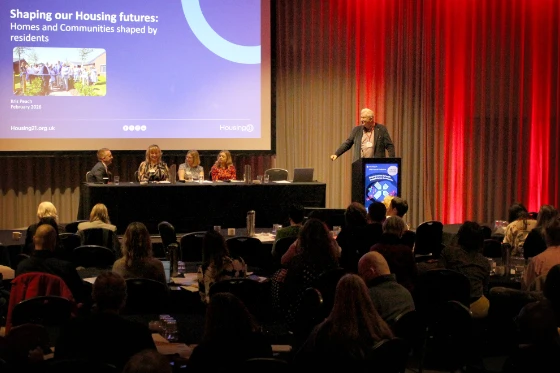
Many presentations highlighted preventative approaches, age-friendly design and resident-led innovation as key to future communities. Overall, it felt like a collective recognition that housing policy is also public health policy, shaping how well people live and age together.
We extend our sincere thanks to our sponsors, speakers and delegates for making this event a success. Your collaboration and insights are helping to shape the future of health, housing and community, ensuring inclusive, empowering spaces for people of all ages.
Below are just a few of the comments from those who joined us on the day.
Speaker presentations
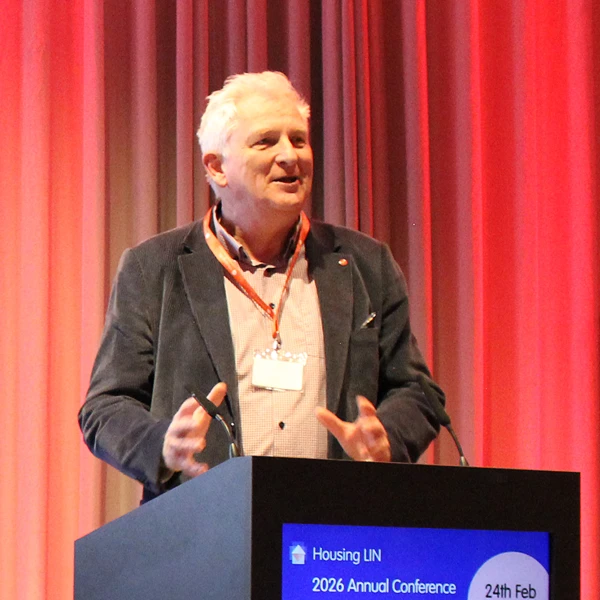
Jeremy Porteus, CEO, Housing LIN
Jeremy opened the event by inviting delegates to look forward with purpose, shaping the future of housing for ageing populations, community and wellbeing.
He introduced the latest updates from the SHAPE Exchange programme and framed the conference as a forward-looking platform to explore what it truly means to design and deliver homes that enable people to live well as they age.
He outlined Housing LIN’s five priorities for 2026: accessible, inclusive homes; more intergenerational housing and communities; a shared commitment to healthy, caring places; a managed digital switchover ahead of analogue shutdown; and stronger supported housing options that promote independent living.
He also highlighted how the conference was an opportunity to capture progress on the Older People’s Housing Taskforce and Homes England Social and Affordable Housing funding, with the bidding round opening that day, as well as the APPG intergenerational inquiry report (recently launched at the House of Lords), HAPPI-TAPPI designs, and Appleby Blue's RIBA success showcase.
Links:
- Our Future Homes: Housing that promotes wellbeing and community for an ageing population
- APPG Inquiry report: Creating Intergenerational Communities
- Technology for our Ageing Population: Panel for Innovation' (TAPPI) project
- Housing our Ageing Population Panel for Innovation (HAPPI)
- United St Saviour’s Charity’s almshouse Appleby Blue wins Stirling Prize
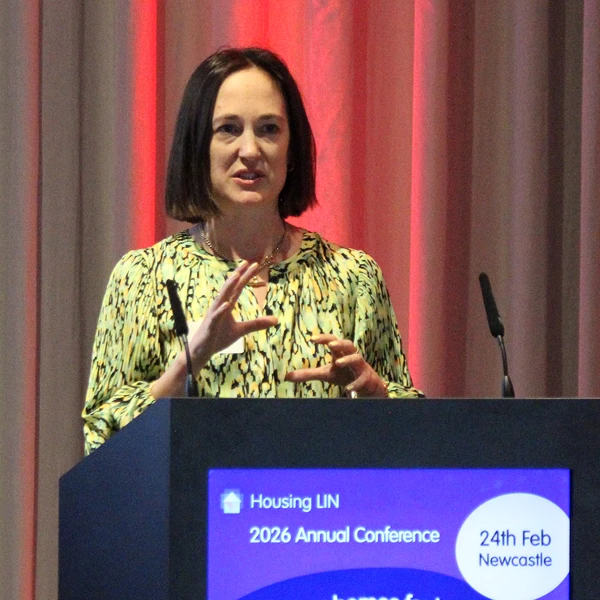
Katy Saunders, CEO, Vivensa Foundation
We were pleased to be joined by Katy who presented the SHAPE Exchange programme, a five-year collaboration between Housing LIN and the Vivensa Foundation, focused on driving practical solutions and system change for an ageing society. The programme will co-create age-friendly homes and places with housing, health and social care practitioners and older people, tools, SHAPE testbeds, leadership, advisory group.
Links
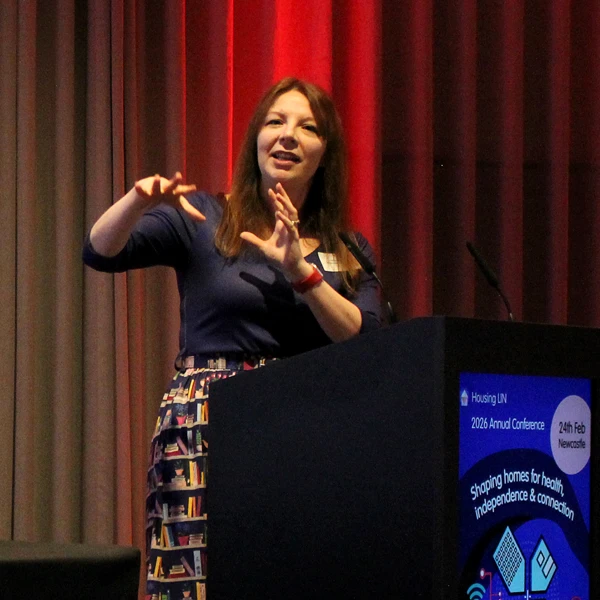
Vikki McCall, Professor of Social Policy, University of Stirling
Our morning keynote speaker wonderfully set the scene for the day, as she showcased the findings of the Intersectional Stigma of Place-based Ageing (ISPA) project, currently in its third year. It is an ambitious 5-year participatory mixed method study that seeks to explore and understand how the stigma attached to where people live can intersect with experiences of disability and ageing. The project is a collaboration between the University of Stirling and the University of St Andrews, Newcastle University and University of Bristol, Scottish Federation of Housing Associations and the Housing LIN.
Links
- Slides: From Stigma to Solutions: Rethinking Ageing, Disability and Housing, by Vikki McCall, Professor of Social Policy, University of Stirling
- Intersectional Stigma of Place-based Ageing (ISPA) Project
- Inclusive Living Alliance
- The Serious Game report: Developing local housing partnerships: a Serious Game for older people’s housing
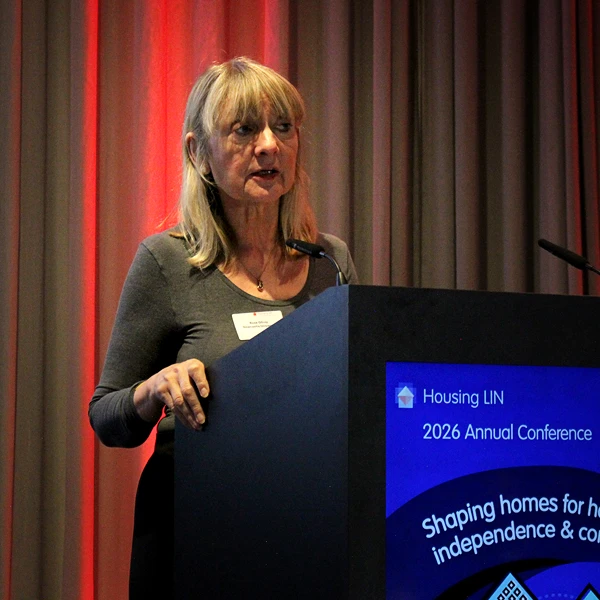
Professor Rose Gilroy, Professor of Ageing, Policy & Planning, School of Architecture, Planning and Landscape, Newcastle University
Rose Gilroy’s presentation challenged the sector to consider context, tenure, and design in addressing housing for older people. She emphasised the disparities in the North East, including lower property values, poorer access to services, and a less healthy population. She critiqued the focus on individual tenure, highlighting its role in perpetuating poor-quality housing and avoidable health costs. She also stressed the importance of aspirational retirement housing design and tenure models that provide long-term security without rapid devaluation.
Key takeaway: Understanding local context, rethinking tenure, and delivering high-quality, aspirational housing are critical to creating sustainable, age-friendly communities.
Links:
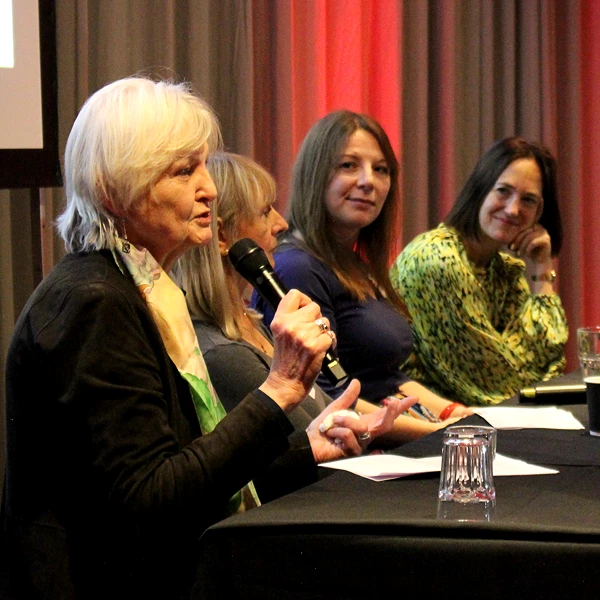
Barbara Douglas, retired Executive Officer, Elders Council of Newcastle
Barbara highlighted the value of dialogue and collaborative learning with older people, drawing on her work with the Elders Council of Newcastle. She notes difficulty finding suitable housing, especially for middle-income people priced out of retirement schemes and wary of fees and resale uncertainty. Many prefer intergenerational neighbourhoods rather than age-segregated settings.
She explained how, through the Elders Council, she explored co-housing by visiting New Ground and LILAC, and formed ‘Independent Creative Living’ with principles of agency, creativity, mutual support, sustainability, accessibility, green space and local amenities.
Key takeaway: Co-housing is promising for those ageing without close family support, with evidence of reduced loneliness and stronger communities.
Links:
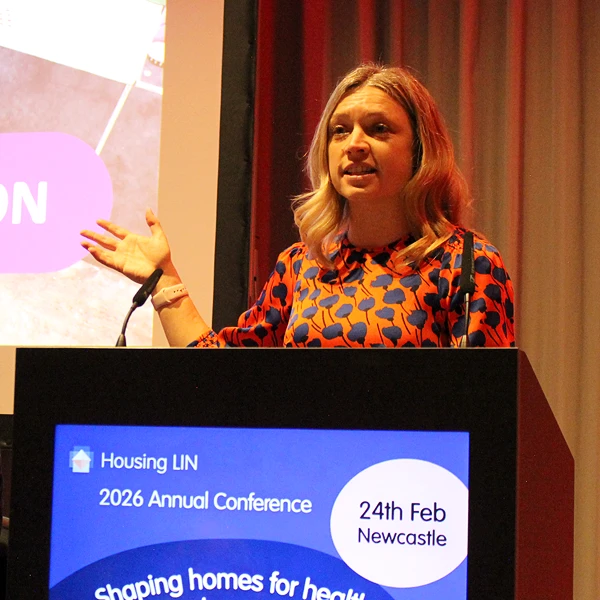
Laura Wood, Founder, Invisible Creations
This presentation addressed the persistent gap between policy, funding, and effective delivery of housing adaptations. Drawing on sector evidence and real-life case studies, Laura highlighted how adaptations are often delayed, fragmented, and poorly experienced by residents. Through the Fit for Our Future campaign, she advocated for a shift from reactive to practical delivery models that align assessment, specification, and implementation earlier. Strategic, joined-up approaches can reduce rework, support inclusive design, protect assets, and improve resident confidence.
Key takeaway: Stronger, coordinated delivery frameworks and strategic partnerships are essential to turn funding and policy into timely, practical housing adaptations that truly meet resident needs.
Links
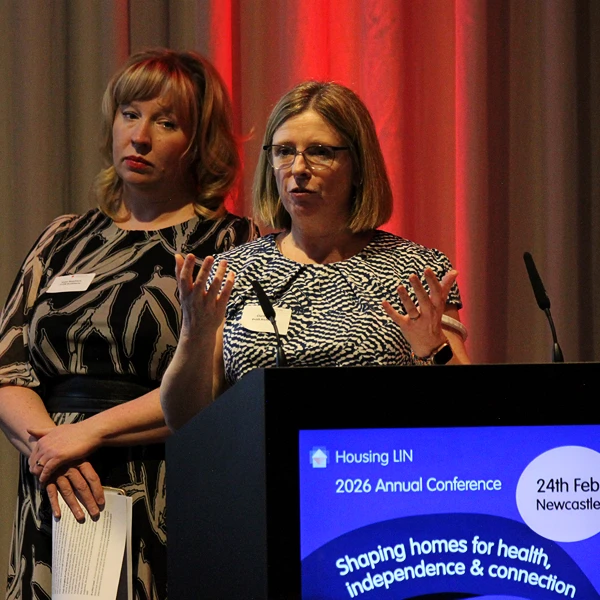
Katie Shepherd, Associate Director, and Clare Lane, Senior Architect and Residential Lead, P+HS Architects
Katie and Clare presented research and policy opportunities for creating healthy cities, places and homes that promote wellbeing in later living. They referenced the Marmot City Principles and the Older People’s Housing Taskforce report, highlighting the role of policy, planning and placemaking. They also explored how to create spaces that offer flexibility and choice in later life, and reflected on how the home has evolved through the 20th century and the challenges that remain.
Key takeaway: The importance of designing environments that support wellbeing and can progressively adapt over time, responding to individuals’ changing needs throughout later life.
Links:
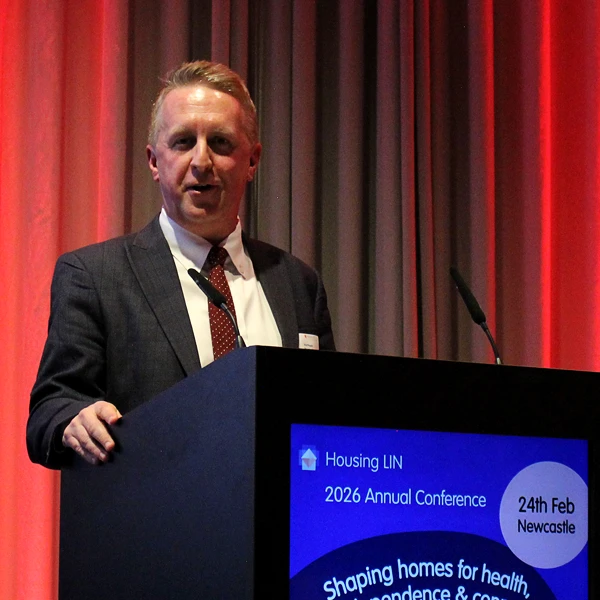
Kris Peach, Executive Director, Housing 21
This presentation explored how Housing 21 is shaping future housing by placing residents at the heart of every decision. It highlights the power of local engagement, co‑creation, devolved decision‑making, data‑driven insight and examples such as co-housing cane help deliver quality homes and vibrant communities for older people. Attendees were shown how innovation, sustainability and inclusive design prepare us for changing resident needs.
Key takeaway: Better housing futures are only possible when we design with residents, build around community, and innovate to support dignity, wellbeing and long‑term sustainability.
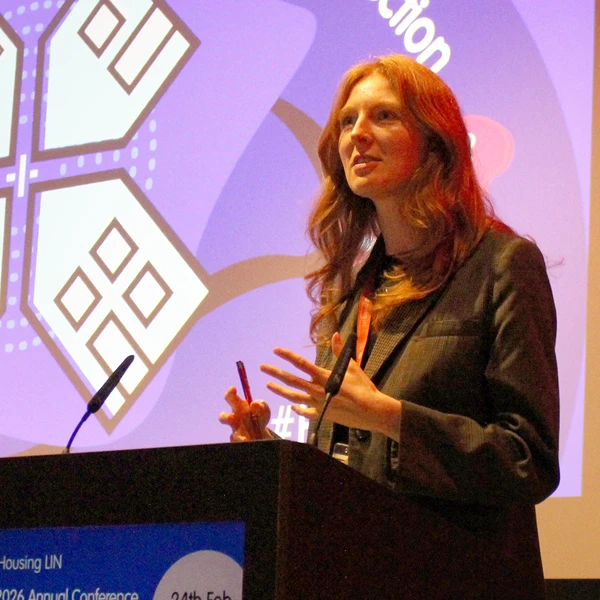
Chair: Lois Beech, Consultancy and Partnerships Manager, Housing LIN
Lois chaired the afternoon Sector Showcase on Shaping Our Community Futures.
Lois leads commercial strategy and partnerships at the Housing Learning and Improvement Network (LIN), driving consultancy and research work that supports innovation across housing, health and care. She specialises in developing strategic partnerships, securing funding and delivering high-quality projects for clients across local government, the NHS, housing and voluntary sectors.
Lois plays a key role in influencing policy and practice, particularly in housing for older people and those with care and support needs. She authored the latest APPG on Housing and Care for Older People Inquiry report on Creating Intergenerational Communities and is passionate about housing models that bring different age groups together.
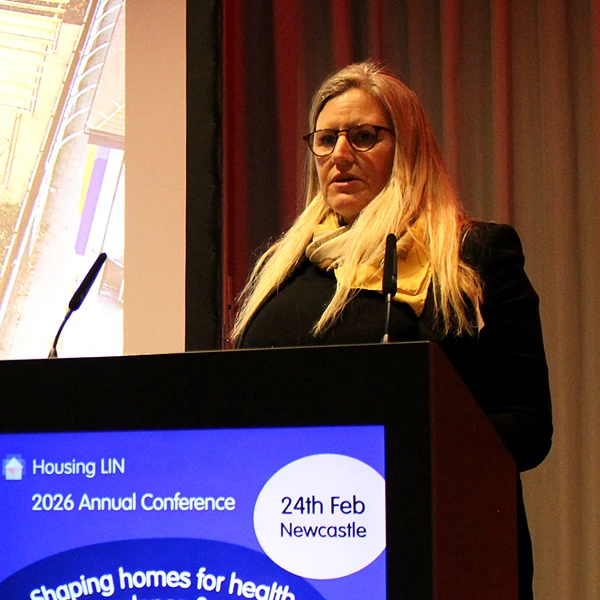
Barbara Clarenz, Head of Residential L&SE, AtkinsRéalis
An insightful presentation of an approach to designing environments for an ageing population across extra care housing, supported living, respite care and later life neighbourhoods. Barbara emphasised dignified, intuitive places connected to nature, aligned with Housing LIN values.
A key example was Emily Lodge Respite Care Centre in Woking, delivered with Surrey County Council, demonstrating how human-centred design supports residents and carers. Features include woodland views, clear orientation, a central courtyard and therapeutic landscapes.
Key takeaway: Nature-led, thoughtfully designed environments can improve wellbeing, independence and community resilience, extending positive impact far beyond the building itself in everyday life
Links:
- Slides: Creating Communities for Life, by Barbara Clarenz, Head of Residential L&SE, AtkinsRéalis
- Blog post: Designing for dignity: A pause for thought on why ‘living well’ must lead our housing future by Barbara Clarenz, Head of Residential and Social Infrastructure, London and South East, AtkinsRéalis
- Blog post: The Value of Landscape in Sheltered Housing: Why Meaningful Engagement Matters by Ujwala Fernandes, Regional Director at AtkinsReális
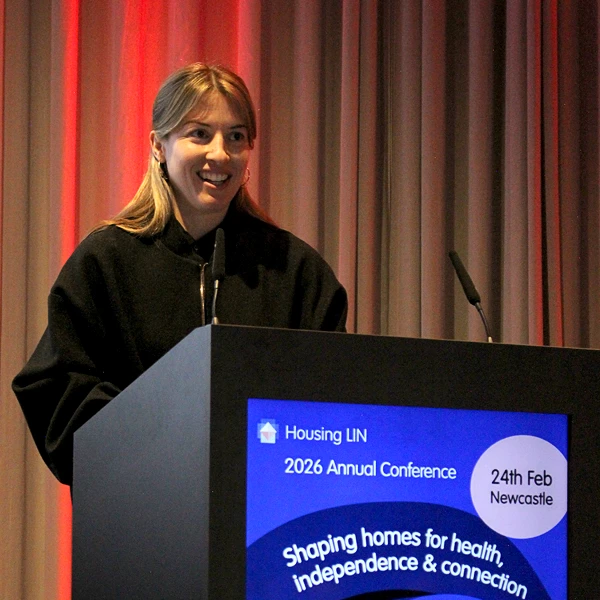
Carly Dickson, Senior Access and Inclusive Environments Consultant, ARUP
Carly’s presentation showcased the Age-friendly Built Environment Quick Guides developed by the Centre for Ageing Better in partnership with Arup and the Housing LIN. The guides are co-produced with local authorities and communities and offer practical, accessible advice for creating more inclusive environments for ageing populations. Covering seven areas (bus stops, parks and green spaces, public buildings, seating, streets, toilets, and wayfinding), she explained how they set out clear design considerations supported by examples, case studies and checklists.
Key takeaway: Small, practical, evidence-based design interventions across everyday environments can collectively create more age-friendly, inclusive and navigable places for all.
Links
- Slides: Age-friendly Town and Parish Guide: Planning and prioritising age-friendly activities, by Carly Dickson, Senior Access and Inclusive Environments Consultant, ARUP
- Age-friendly Built Environment Quick Guides in partnership with the Centre for Ageing Better, Arup and the Housing LIN.
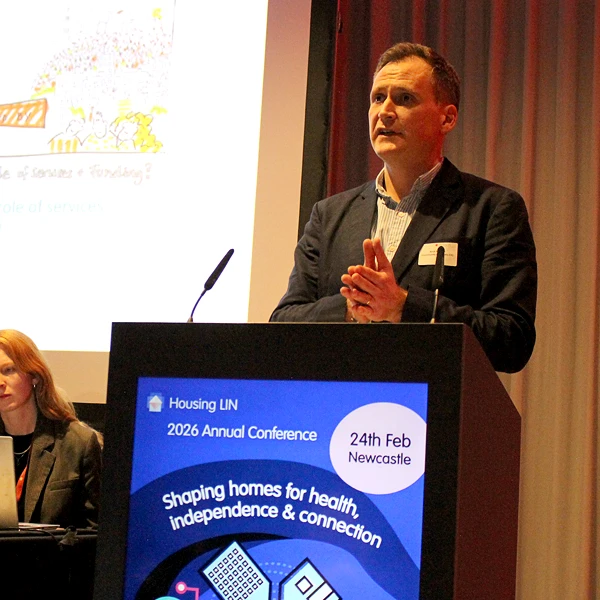
Nick Sinclair, Programme Director (Local Area Coordination Network), Community Catalysts
Nick presented on Local Area Coordination (LAC) as a community-centred approach to supporting people experiencing housing instability. He drew on NIHR evaluation findings which show that LAC works because it is built on time, trust, and non-hierarchical relationships, with no eligibility barriers to access. The approach is strengths-based and helps create a protective buffer that supports people to navigate complex systems and prevent crisis.
He illustrated with Lisa’s story.
Key takeaway: Relational, person-centred coordination embedded in place enables people to navigate fragmented systems and achieve safe, stable housing outcomes.
Links:
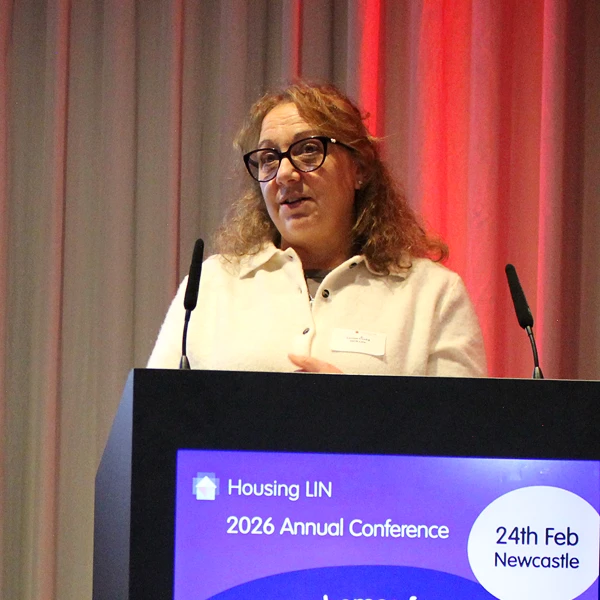
Chair: Louise Crook, Partner, HCR Law
Louise chaired the afternoon Sector Showcase on Shaping Our Healthy Futures.
Louise is a Partner and Joint Head of the Healthcare team at HCR Law, specialising in commercial property and real estate within the health and social care sector. Based in Worcester, she advises developers, healthcare providers, and financial institutions on complex property transactions, helping to deliver practical, solutions-focused outcomes.
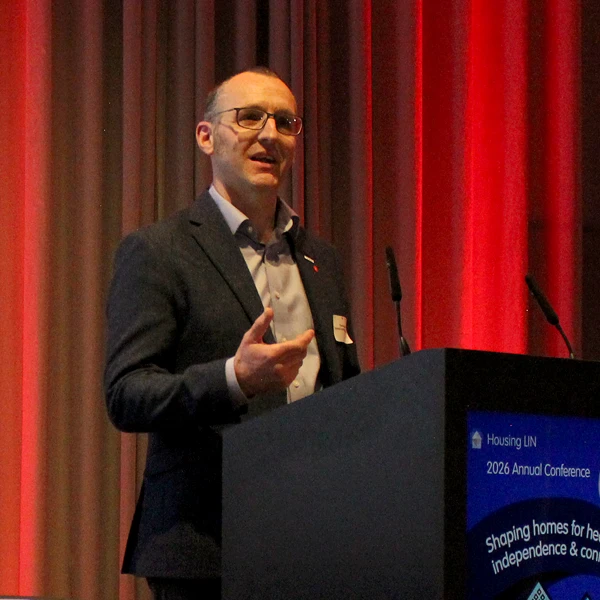
Thomas Dodd, Director of Strategic Engagement, Tunstall Healthcare (UK)
Thomas’ presentation focused on the importance of partnerships with purpose, bringing together organisations to improve prediction, prevention and support for people. He highlighted how many care costs are driven by predictable conditions and patterns, such as falls at night linked to bathroom visits. His approach emphasised using data not just for insight but to provoke timely action. He also explored independent living as a service, where support is proactively designed around risk and need.
Key takeaway: Effective partnerships, powered by shared data and predictive insight, can enable earlier intervention and better outcomes that sustain independence.
Links:
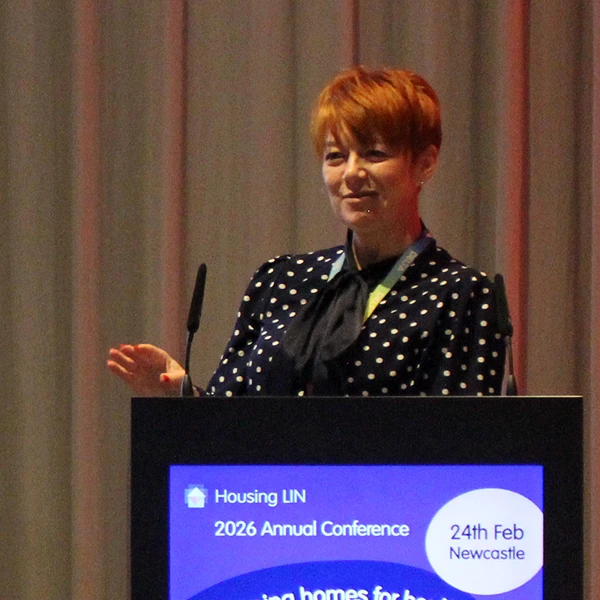
Carla Dix, Head of Business Development and Partnerships, Delta Wellbeing
Carla presented a “From Reactive to Preventative” approach using Delta – The Connected Model, showing how CONNECT works across housing, health and care.
Key takeaway: Joined-up, cross-sector working enables a shift from reactive crisis responses to preventative, coordinated support that improves outcomes and reduces avoidable escalation.
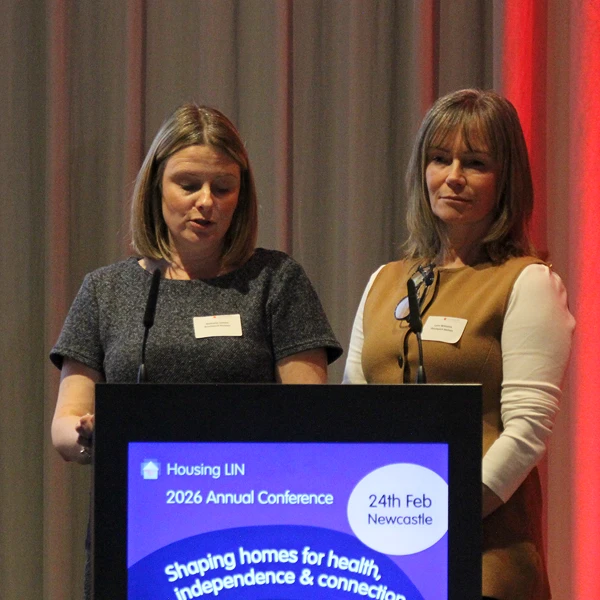
Natalie James / Lynn Williams, Independent Living Operations Manager, Stockport Homes
This presentation demonstrated how Stockport Homes’ Independent Living and Carecall teams are using technology and partnership working to transform care. By piloting digital systems in sheltered housing and community settings, they enhance safety, independence, health monitoring, and social connection.
Data from sensors and UMO reporting enables early intervention and reduces pressure on health and emergency services. Collaborating with NHS, social care, and national providers, Carecall explores emerging tools including AI while maintaining TSA‑accredited standards. Their service now operates nationally, offering both monitoring-only and monitoring-and-response packages.
Key takeaway: Technology-enabled care, supported by strong partnerships and data-driven insight, can improve resident independence, wellbeing, and service efficiency on a national scale.
Slides:
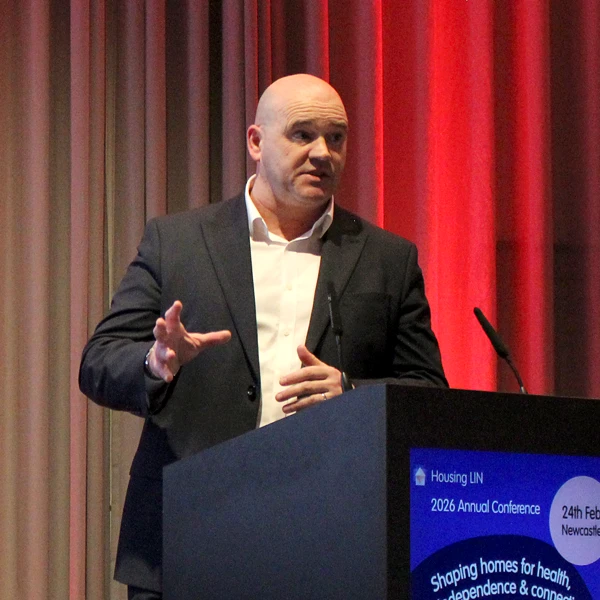
Jon McDonald, Head of Supported Housing, Karbon Homes (North East Housing Partnership)
Jon’s presentation highlighted the importance of housing for older people within an ageing population, emphasising the role of aids, adaptations and extra care housing in supporting independence. He described the North East and North Cumbria Housing, Health and Care Programme, where partners, including the North East Housing Partnership, are working to improve outcomes.
Key takeaway: Strong, early partnerships between housing, health, and local authorities are essential to deliver extra care housing at the scale required.
Links:
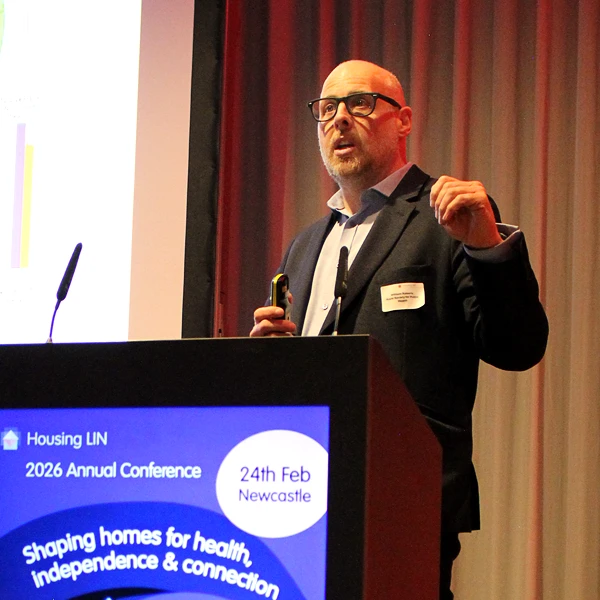
William Roberts, Chief Executive, Royal Society for Public Health
Our afternoon keynote delivered an eye opening presentation on housing as a means to create a healthier, happier nation. He set out why a healthy nation is needed, highlighting growing physical and mental ill health, pressure on health and care services, premature mortality and stalled life expectancy, financial pressures and economic inactivity, and widening inequalities. He argued that creating healthy places goes far beyond healthcare alone.
Key takeaway: Housing has a central role in prevention by delivering great homes and places, understanding residents’ needs, building workforce capability, and working across government to embed health in all policies.
Links:
Headline sponsors






Affiliate sponsors