
More long term homes not long stay hospitals
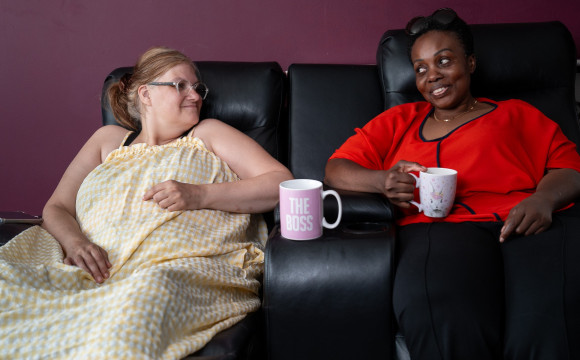
Supported housing is such a fascinating, rewarding and complex sector. There is huge variation amongst the customers we support, the types of housing we provide and yet it is united by the same principle: the right home, with the right support at the right time enables people to live good lives as part of their community.
Specialist supported housing puts that principle into practice for people with some of the most complex needs. Yet there is a fundamental problem with how these homes are funded.
Much of the supported housing sector can access public capital to help meet the cost of developing homes. For Specialised Supported Housing, however, accessing the capital needed for the building itself can be an insurmountable challenge.
For people with complex needs, housing often needs to be highly bespoke. Homes may require physical adaptations to meet sensory needs, additional space for 24-hour support teams, specialist design features or more robust materials. As a result, specialist homes can cost two to four times more to develop than general needs or other supported housing, with costs of around £600,000 per home.
The funding model compounds the problem. The Rent Standard enables higher rents for Specialised Supported Housing, but only where there has been “no public subsidy”. This means providers cannot generally combine the higher rents needed to make specialist schemes viable with public capital grant. Higher development costs therefore must be financed in other ways, including private borrowing, adding further cost and risk.
The result is market failure. The people who most need secure, specialist housing are among the least able to benefit from government investment in new social homes.
Years wasted in hospital
We all know from our own experience how fundamental it is to our health and happiness that our home suits our needs and those of our family. For someone with a learning disability or an autistic person with complex needs the consequences of not having a suitable home can be devastating.
Without the right home and support people with a learning disability and autistic people can find themselves sectioned under the Mental Health Act and detained in secure mental health hospitals. Housing is the cause of up to half of all delayed hospital discharges for this population. Once admitted, the average length of stay in hospital for people with a learning disability and autistic people is 4.6 years.
For individuals and families, the consequences can be profound. Unfamiliar institutional settings can expose people to restrictive practices, including restraint, seclusion and over-medication. It can take years of specialist support for people to recover from trauma experienced in institutional care.
The solution
Specialist community housing, alongside the right support, can help prevent inappropriate hospital admissions and enable people already in hospital to be discharged.
As identified by the Housing LIN, England needs an estimated 34,000 new supported homes for people with a learning disability and autistic people by 2037, yet delivery remains far short of what is required.
Closing that gap requires us to treat specialist housing as an essential part of the solution, not as an afterthought.
The Learning Disability and Autism Housing Coalition
The Learning Disability and Autism Housing Coalition brings together people with lived experience, charities, housing providers, commissioners and national expertise around one shared goal: to increase the supply of specialist supported housing.
We are:
- Working with Government national and local decision makers so that the housing needs of people with a learning disability and autistic people are properly understood and reflected in housing, health and care planning.
- Building the evidence base to demonstrate both the human and financial case for investment in specialist housing.
- Calling for government to remove the funding barriers that make specialist supported housing unnecessarily difficult to develop.
Join us
A hospital should never become someone's long-term home. We are looking for organisations that share our ambition and want to contribute expertise, influence and investment to our work.
If you are interested in finding out more, please contact Penelope Green, Programme Director, at penelopegreenconsulting@gmail.com (opens new window).
If you'd like to join the wider conversation, sign up to Learning Disability England's Housing Community of Practice (opens new window). First established by NHS England in 2023, the Community provides a regular opportunity to connect, collaborate and learn.
Lastly, the Housing LIN is proud to promote the work of Learning Disability England’s Community of Practice and acknowledge their support in sharing further learning via the dedicated Housing and Learning Disability webpages curated by the Housing LIN.
Comments
Add your comment