
Intersectional Stigma of Place-Based Ageing (ISPA) Project: Celebrating Year Four
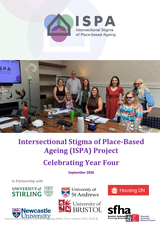
September 2026 marks four years of the Intersectional Stigma of Place-Based Ageing (ISPA) Project. This latest update offers a roundup of the activities and achievements in Year 4.
It has been another busy and inspiring year for the Intersectional Stigma of Place-Based Ageing (ISPA) Project. Year 4 has seen the completion of major data collection, further analysis of how age, disability and place intersect, new case studies and publications, and continued co-production with Community Peer Researchers. The team has also been sharing emerging findings with audiences across the UK and internationally, while developing new learning and practical resources to help challenge stigma and support more inclusive policy and practice.
A major milestone this year has been the completion of ISPA’s longitudinal qualitative diary study, with more than 700 pieces of evidence contributed by over 140 Community Peer Researchers across Scotland, England and Wales. Alongside this, Community Peer Researchers have continued to shape the project through neighbourhood mapping, blogs, events and activity within their own communities.
You can read the full Year 4 update under the link at the bottom of this page.
Alongside the Year 4 update, we are also delighted to share ISPA’s latest blogs:
- Connecting through badges, sticks and ticks - ISPA Community Peer Researcher Liz Richardson reflects on how everyday encounters, from walking sticks and badges to conversations on buses and in the street, can help tackle loneliness and create stronger connections with others. ISPA - Connecting through Badge…
- Paving the way to inclusion: Reflections from Neighbourhood Mapping in South Wales - Dianne Theakstone and Lisa Davison, working with Community Peer Researchers, explore the everyday barriers disabled people encounter when navigating streets and pavements and what is needed to create genuinely inclusive public spaces. ISPA - Wales Blog
Together, the Year 4 update and latest blogs show how lived experience and co-production continue to sit at the heart of ISPA, helping to turn research into practical learning about more inclusive homes, neighbourhoods and communities.