
Senior Cohousing has a lot to offer, but should we also consider the merits of intergenerational living?
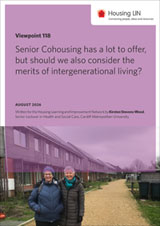
In this Housing LIN Viewpoint, Dr Kirsten Stevens-Wood, Senior Lecturer in Health and Social Care at Cardiff Metropolitan University, explores two contrasting models of cohousing for an ageing Britain: cohousing designed specifically for older adults, and cohousing that brings generations together under one roof.
Senior cohousing, she explains, allows residents to keep their independence in self-contained homes while sharing communal facilities that help combat loneliness and support ageing in place. Drawing on examples including New Ground in North London and Rupali Court in Birmingham, she notes the value residents place on "looking out for each other, but not looking after each other" — though she cautions that communities made up entirely of older people can face shared vulnerabilities as care needs rise together.
Intergenerational cohousing, by contrast, mixes households of different ages and life stages, fostering reciprocal exchange, and reflecting the diversity of wider society. Referencing the APPG Inquiry into Creating Intergenerational Communities, Kirsten sets both models within the bigger policy picture, weighing their practical challenges alongside their benefits.