
PPP Manchester roundtable on Neighbourhood Health frames the agenda
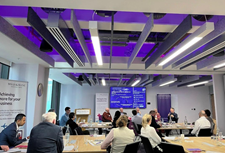
Hot on the heels of the publication of the NHS Neighbourhood Health Framework, our CEO, Jeremy Porteus, was delighted to join a roundtable in Manchester last week with national and regional health and social care leaders on neighbourhood health, organised by Public Policy Projects (PPP).
The new guidance from DHSC gives Health and Wellbeing Boards a more central role as the joint local forum for shaping neighbourhood priorities with ICBs and councils, aligning partners around a shared plan, and helping ensure neighbourhood health is driven by population need and community voice, including housing, rather than NHS structures alone
Jeremy Porteus commented:
“We need to change the axis from vertical to horizontal integration and, when framing ‘neighbourhood health’, look beyond health and adult social care. Health starts at home and healthy placemaking is not about fitting people around services and systems it’s about ‘putting people first’ and connecting communities.”
Hosted by Mills & Reeve and supported by Tunstall Healthcare (UK), Quantexa and Mayden, this was the first in a series of PPP meetings designed to provide constructive conversation on neighbourhood health.
On the NHS neighbourhood health, Mark Hindle, Tunstall Healthcare’s Managing Director, said:
“The Framework is a significant step towards strategically connected health, social care and community services. At Tunstall, we welcome all updates that work to align services.
“Whilst we understand that true healthcare starts at enabling earlier intervention, better decision-making and joined-up, proactive care, the sector must begin creating opportunities to harness the power of technology that is already in the home, already supporting vulnerable people and already behaviour mapping. This is the only way to create connected solutions and become the backbone for prevention.
“Now, the real opportunity lies in unlocking data, connecting services and moving telecare from reactive safety net to neighbourhood intelligence infrastructure. Together, we must acknowledge that we are not starting from a position of strength on data. In many cases, telecare teams are working with fragmented, inconsistent data, if they have access to it in a usable form at all, but by delivering integrated services we can bridge this gap together.”
A briefing note from the roundtable is due out soon.